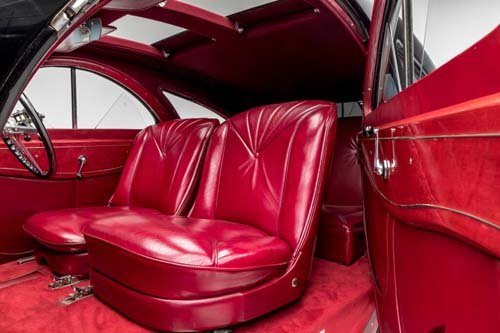

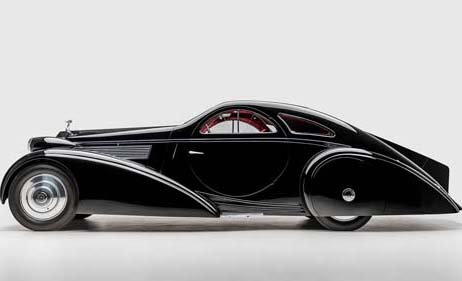
The eye-catching “Round Door” Rolls-Royce, one of the rarest and most extravagant cars of the 1930s, features a 7.66-litre inline-six engine and a four-speed manual transmission.
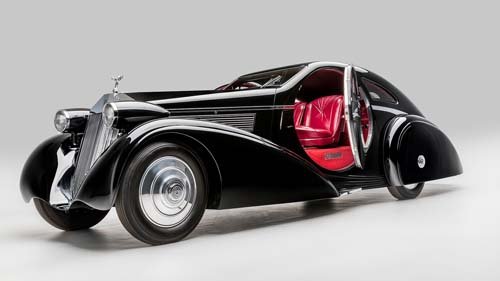 In the early 1930s, very few designers had considered modifying the traditional Rolls-Royce vertical grille, but this alteration became essential for Jonckheere to achieve a more streamlined profile for the Phantom’s new body. Bullet-shaped headlights, flowing fenders and a long vertical tailfin down the boot lid complete the sleek contours. As Figoni experimented with oval doors, Jonckheere opted for unique, large round doors which operate flawlessly and allow passengers access to either row of seating.
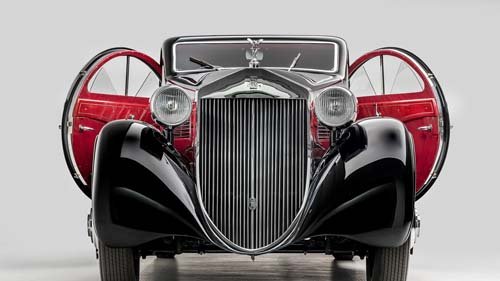 As attractive as round doors may seem, they did, however, present an issue with operating the windows. The solution was to fabricate a two-piece window that simultaneously split like scissors down into the door. At nearly 20 feet in length, it could very well be the largest two-door coupé in existence. The Jonckheere records were destroyed in a fire, and it remains unknown who commissioned or designed this one-off masterpiece.
 As with all Phantoms, this Rolls-Royce requires considerable input from the driver. It is a beast to steer at low speeds, requires double-clutching during gear changes (much like an old Jonckheere bus) and, understandably, due to its weight, needs adequate distance for braking. As for its turning radius, U-turns were probably not part of the driving experience. The car’s very low ground clearance suits the overall silhouette but can also be troublesome when approaching slopes, driveways or speed bumps due to the long rear overhang.
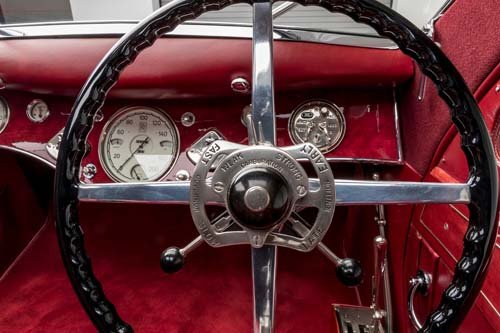
The vehicle’s high seating arrangement provides a great view of the road for the front occupants, but the rear-sloping roof cuts into rear passenger headroom to the extent of requiring an uncomfortable slouch. All of these apparently faulty design elements mean absolutely nothing when reflecting on the real purpose of this car: to impress all who see it. Whether viewed by pedestrians, other motorists or even concours judges, this behemoth makes a serious statement. Since its spectacular restoration, the Round Door Rolls has been prestigiously shown at both the Pebble Beach and Meadowbrook Concours d’Elegance. Due to missing historical records, it was regrettably ineligible for any top prizes, but did receive the Lucius Beebe Trophy, reserved for the finest Rolls-Royce.
Like other classic cars, this fine piece of Art Deco design has travelled a rough road and has gratefully received the attention it so richly deserves.