

Automotive Artistry to Admire
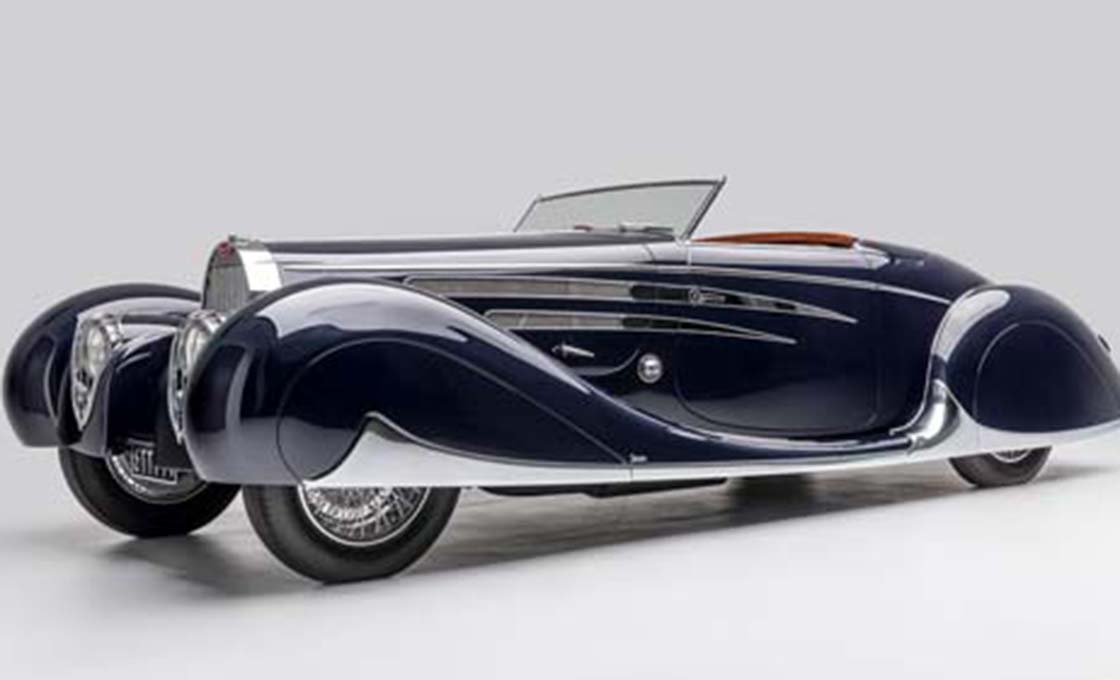
The Shah of Persia’s Bugatti was among the most spectacular bodies fitted to a Type 57 chassis. Mohammad Pahlavi was the son of Reza Pahlavi, the Shah responsible for the modernisation of Iran, and he took a keen interest in automobiles.
Mohammad Pahlavi succeeded his father and ruled the oil-rich nation of Iran from 1941 onwards. In 1979, conservative Muslims led by Ayatollah Khomeini revolted and overthrew Mohammad’s monarchical dictatorship.
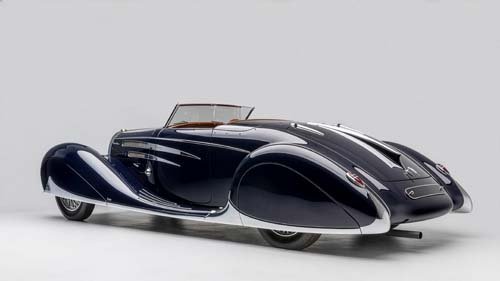
On the occasion of his marriage to Princess Fawzia, the second of his three wives and a daughter of King Fouad of Egypt, in Cairo on 14 March 1939, the French Government commissioned the finest talent in the country to provide a wedding gift for the Shah. To create one of the most extravagant automobiles ever to emerge from France, Van Vooren and Bugatti were selected for the task. Drawing inspiration from the flowing lines of Figoni et Falaschi, Van Vooren worked on chassis no. 57808, a low-slung Bugatti Type 57C. The result was a two-passenger cabriolet of remarkable proportions and style. Among the unusual features introduced by Van Vooren were a very short windscreen that could be wound down into the bulkhead and a disappearing hood concealed beneath a panel behind the passenger compartment. Bugatti supplied a Type 57C chassis equipped with a supercharger, enabling the car to produce an impressive 175 horsepower (130 kW) from its 3,245 cc engine. The car currently resides at the Petersen Museum in California, alongside some of the most important automobiles in the world.