

INTERNATIONAL LIFESTYLE & LUXURY EXPERT COLUMNIST
The New Red Carpet Currency: Presence Over Provenance
How are you wearing?
At the 77th Cannes Film Festival, the conversation has shifted from “Who are you wearing?” to “How are you wearing?”
The marble steps of the Palais des Festivals have witnessed nearly eight decades of sartorial theatre. Grace Kelly’s ice-blue Edith Head gown in 1955. Brigitte Bardot’s gingham dress in 1953. Nicole Kidman’s chartreuse Dior slip dress in 2003, which halted traffic along the Croisette. These moments once defined Cannes legendry.
But walk the red carpet in 2026, and you’ll notice something has fundamentally changed.
The flashbulbs still explode. The gowns still cascade. Yet the true object of fascination has shifted from the artefact to the aura. In an era where every major fashion house dresses multiple celebrities simultaneously, where a Dior couture number might appear on three different women across a single weekend, the dress itself has been democratised by ubiquity.
What cannot be replicated, borrowed, or styled into existence is presence.
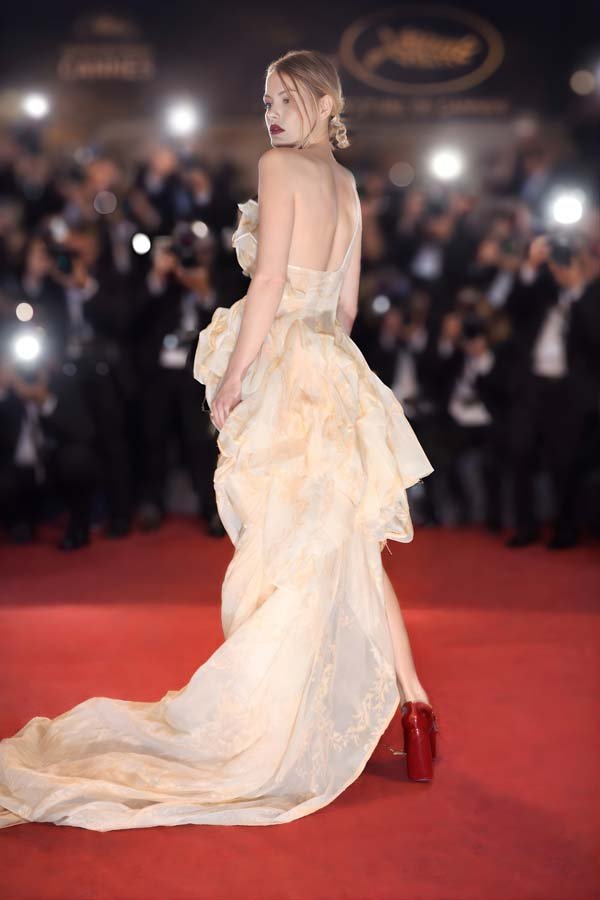 Designer: Hector Maclean
The Economics of Attention
Luxury has always traded in scarcity. For decades, that scarcity was material: the right archive piece, the virgin season collection, the exclusive designer relationship. Today’s scarcity is physiological.
Consider the recent festival circuit. When luminaries arrive, cameras capture not merely fabric and silhouette, but voltage: the measurable wattage of someone who has slept, hydrated, trained, and bio-optimised their way into a state of radiance that outperforms any diamond’s refraction.
This is the longevity aesthetic made visible.
The skin that hasn’t succumbed to decades of Mediterranean sun and late-night premieres. The posture maintained through Pilates and proprioceptive training. The cognitive sharpness allowing genuine engagement with journalists after twelve hours of appearances. These are not accidents of genetics but investments in systems, protocols that begin months before the festival and extend years into regimens invisible to the public.
The Dress as Frame, Not Subject
Azzedine Alaïa once observed that “the dress must follow the body of a woman, not the body following the shape of the dress.” The contemporary Cannes attendee has inverted this further: the dress now serves as architectural frame for the body-as-sculpture.
Witness how the current generation approaches their selections. Where previous eras sought volume, construction, and spectacle, train lengths measured in metres, corsetry that required assistants, the prevailing instinct is toward intentional restraint. Silhouettes that permit movement. Fabrics that breathe. Designs that don’t compete with the wearer but amplify her.
The message is unspoken but unmistakable: I have curated myself so completely that I require no costume to command the room.
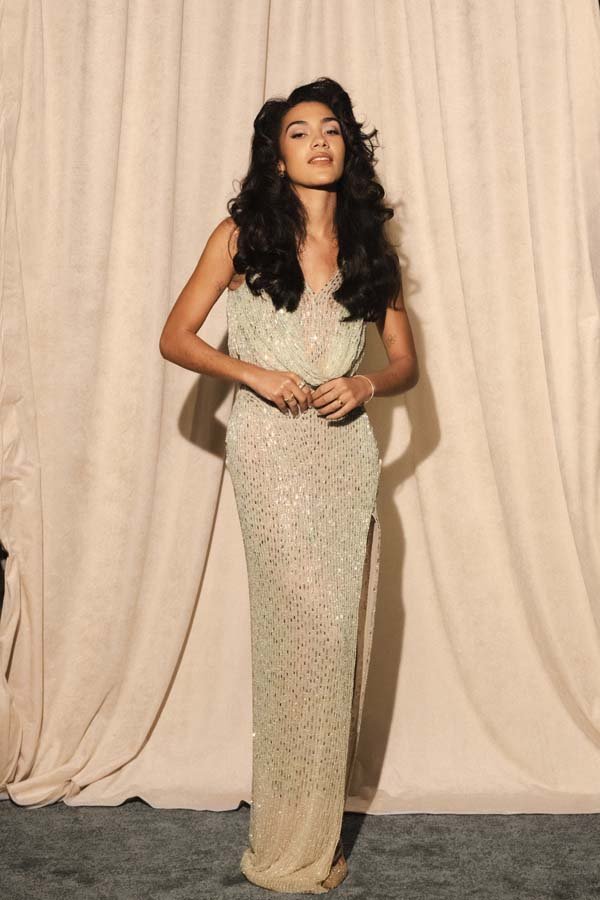 Olivia Dean
Designer: Julien Macdonald
The After-Party Reveal
What happens when the photographers depart reveals the truth of this transformation.
Formerly, the post-premiere hours meant escape, shedding the performance of glamour for comfort. Today, the most photographed women often appear at after-parties with enhanced, not diminished, vitality. The same luminosity that served them under floodlights persists in candlelight. This continuity suggests not exhaustion but reservoir: the dividend of compounding investments in cellular health, recovery architecture, and stress resilience.
The festival has become, in essence, an endurance event disguised as a celebration. Those who thrive across its twelve-day marathon treat it as such, applying athletic discipline to aesthetic performance.
The Implications for Luxury
For the houses that dress these women, this evolution presents both challenge and opportunity. The garment can no longer be the sole protagonist. It must be engineered for performance, breathable construction, weight distribution, freedom of movement, while maintaining the fantasy that justifies couture pricing.
More significantly, the relationship between brand and wearer has shifted from patronage to partnership. The most successful collaborations now involve months of dialogue about how a piece will function within a broader ecosystem of the wearer’s preparation. The dress becomes one component of a total system optimised for presence.
The Return to Essence
There is something fitting that this shift occurs at Cannes, where the Mediterranean light has always been unforgiving and the steps unforgivingly steep. The environment itself demands authenticity. You cannot fake your way up those stairs. The physical reality of the festival, heat, height, duration, rewards those who have prepared the vessel, not merely decorated it.
In this sense, the red carpet has come full circle. Before the industrial fashion complex, before the sponsorship contracts and the stylist economy, presence was all one had. The contemporary moment represents not departure from glamour’s golden age but return to its essential truth: that the most magnetic quality any person can possess is the evidence of having lived well.
The dress will always matter. But increasingly, it matters most as evidence of the life that produced the woman wearing it.
The author covers luxury culture and the science of performance optimisation.
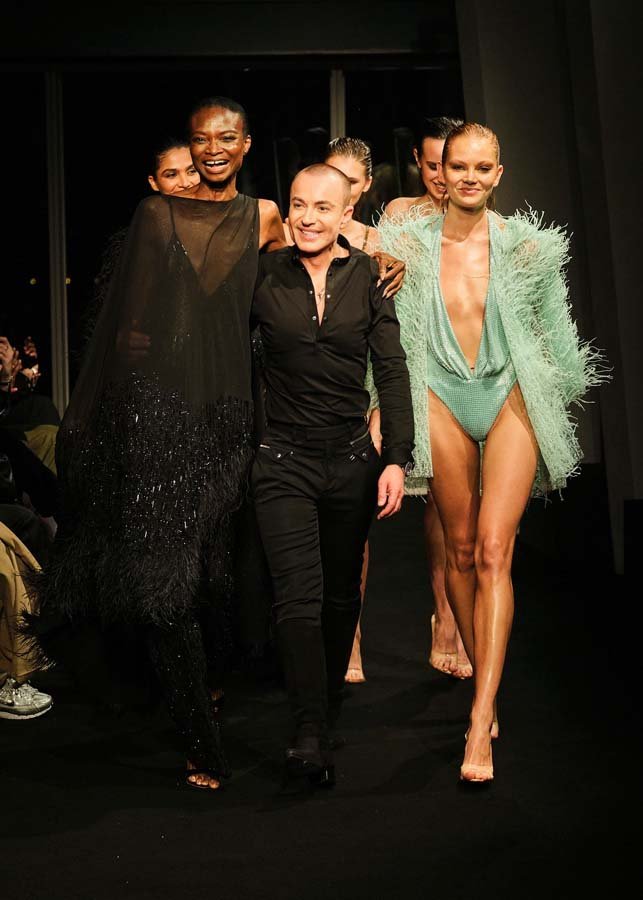 Designer: Julien Macdonald