
Dbm Studio: Entering The European Landscape
A moment that signals not just expansion, but evolution, DBM Studio enters the European landscape with a clarity of vision shaped by two distinct yet complementary forces: the intuitive, narrative-led direction of Mahsa Gholizadeh and the strategic precision of Maria Korobko. Together, they are not simply scaling a studio; they are redefining how emotionally intelligent design can operate across cultures, markets and expectations.
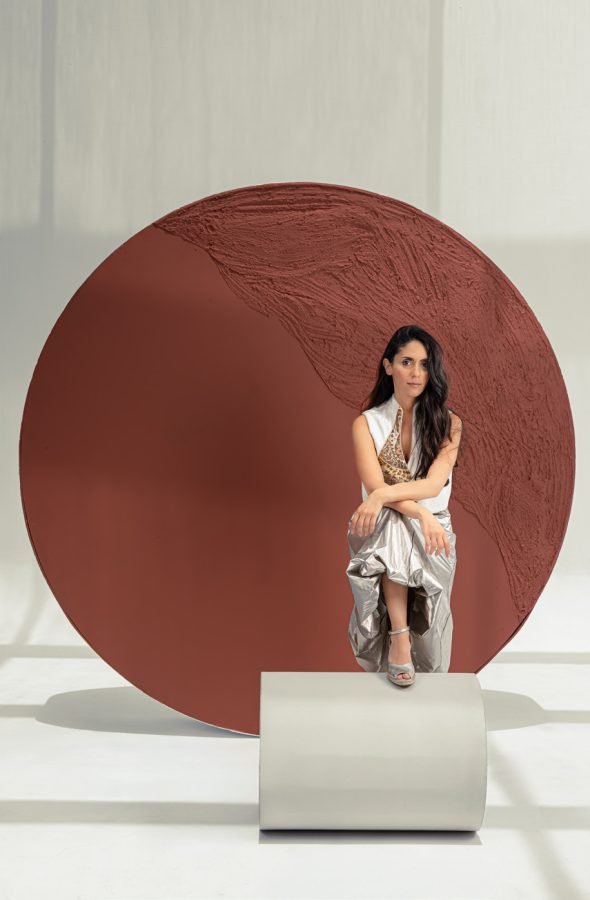 MAHSA GHOLIZADEH
Mahsa, your work is often described as deeply narrative and emotionally charged, yet translating something as intangible as memory or atmosphere into a physical space requires more than intuition. At what point does emotion become structure in your process, and how do you ensure that what begins as a personal vision resonates universally rather than remaining purely subjective?
Emotion is always our starting point, but it cannot remain abstract if it is going to live in a built space. It becomes structure when we begin to test it against the realities of architecture, proportion, materiality and use. What begins as memory or atmosphere is gradually translated into precise and repeatable decisions, so that the feeling is embedded within the space itself, rather than de pendent on interpretation. We are very conscious that what feels deeply personal in origin must still resonate beyond us as designers. In Isabel Mayfair Abu Dhabi, for example, the narrative was rooted in a very specific sensibility, yet through material discipline and spatial rhythm it became something guests could feel intuitively rather than decode. As we expand DBM Studio into the UK, this translation becomes even more important, because we are communicating not just spaces, but a consistent emotional language that can travel across cultures.
You built DBM Studio organically, without external investment, a path that demands both creative conviction and restraint. Looking back, which decisions most clearly defined your authorship as a designer, and where did you consciously choose long-term identity over short term growth?
Building DBM Studio without external investment shaped everything about how we define authorship. It meant we were never designing for speed or scale in isolation, but always ma king decisions that protected the studio’s long-term identity. The most defining choices were often the ones where we said no to opportunities that did not align with our design language, even when they were commercially attractive. That discipline forced us to be clear about what DBM Studio stands for, and over time it created a recognisable voice that is not dependent on trends or market pressure. As we now look towards growth in the UK, we see that those early decisions were not limitations, but foundations, allowing us to expand into a broader role and create an identity that includes storytelling through interior design, while still protecting the integrity of our authorship.
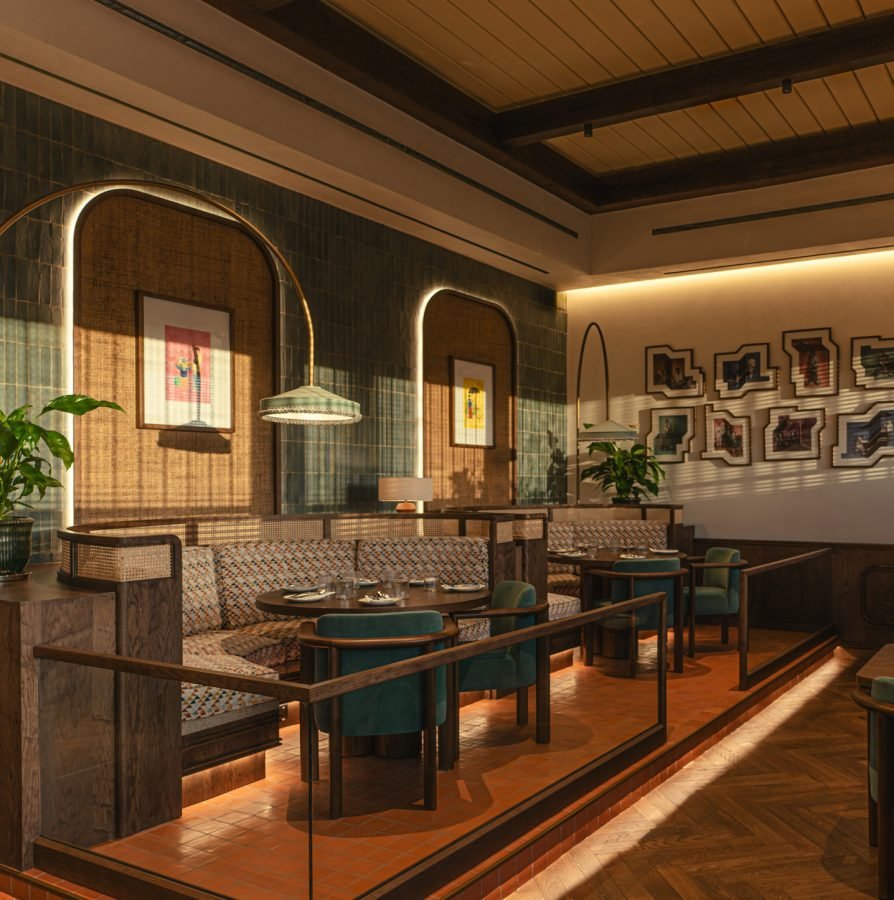
You often speak about intuition, trust and alignment, concepts that can feel almost philosophical in a highly commercial industry. How do you reconcile that mindset with the realities of large-scale projects, budgets and client expectations, particularly when intuition and practicality are not in agreement?
For us, intuition is important, but it is never treated as a final answer on its own. It is more like an initial reading of a space or a brief, which we then interrogate through the realities of budget, structure and client expectations — often they can be challenging to align. In practice, this means we frequently have to separate what feels instinctively right from what is achievable within a specific commercial framework, and then find the bridge between the two. There are moments when we are asked to simplify or scale back an idea, and instead of seeing that as a compromise, we treat it as a design constraint that can sharpen the outcome.
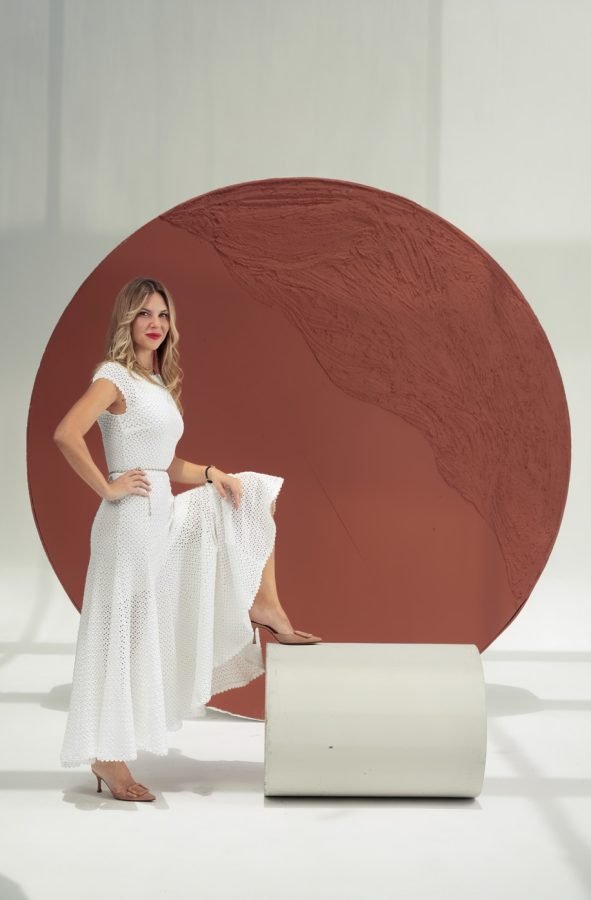 MARIA KOROBKO
Maria, with experience spanning both Europe and the Middle East, you enter the European expansion not as an observer, but as someone deeply familiar with both ecosystems. What structural differences between these markets do you see as the most decisive, not in theory, but in how projects are actually com missioned, executed and valued?
The key difference is that the Middle East is execution-driven and fast-paced, even with all the strict regulations, while Eu rope is much more compliance-driven. In Europe, regulatory requirements directly shape both the timeline and the design. For example, in the UK, major changes often require a Licence for Alterations, along with Building Control approvals, which can significantly extend timelines. In Spain, drawings must be adap ted and signed off by a locally certified architect, adding another layer of coordination. At the same time, fire safety regulations across the UAE, the UK and Europe are increasingly strict, but they vary quite significantly by country, so each project requires careful local adaptation. In contrast, in the Middle East, once approvals are secured, the system is designed to move quickly, with greater flexibility. So the real shift is in approach: in the Middle East, you accelerate execution, while in Europe, you front load precision, compliance and coordination.
Your background bridges operations and strategy, two per spectives that are often siloed in hospitality. How does this dual lens influence the way you assess potential projects, and what do you tend to notice that others, working from a purely creative or purely commercial standpoint, might overlook?
We tend to look at projects with my team as living ecosystems, not just concepts or numbers. We start with the customer — who we are building for and whether the positioning can sustain demand. Then we translate that into operations: how the space flows, how the team works, where inefficiencies might appear, and how to adapt and optimise them operationally from the beginning. All of that has to be reflected in the design — in every technical drawing, layout and decision. Because in hospitality, success is very tangible: the guest feels it. The com fort of the seating, the table height, the lighting, the air quality, the overall ease of the experience and, of course, whether the product is good and feels appropriately priced for what they receive. At the same time, I am always testing scalability — in terms of both time and volume — and whether the concept can grow and be optimised without losing its identity. What this perspective allows me to see is where a concept may look strong visually or financially, but fail in the actual guest experience — and that is ultimately what defines whether the business will grow.
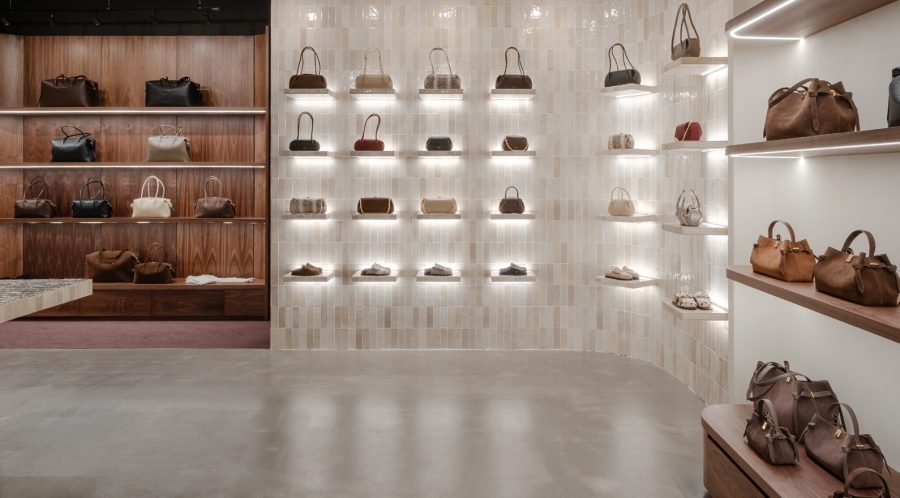 In recent years, the language of luxury in hospitality has shifted, becoming more understated, more experience driven and arguably more demanding. How has this evolution changed the way you approach growth, partnerships and long-term positioning for a studio like DBM?
Luxury today is much less about visibility and much more about how it feels — it is quieter, more personal and far more demanding in terms of detail and authenticity. For a firm like DBM Studio, this means growth has to be very intentional. It is not about scaling volume, but about YUZEFI INTERIORS selecting the right projects and partners who understand the value of narrative, detail and long-term thinking. Partner ships become more curated — working with operators and developers who are aligned on quality, not just timelines. In terms of positioning, it is about creating spaces that are not only visually compel ling, but also emotionally resonant and operationally refined — I believe that is what defines luxury today