

59744FOUNDER OF MAXIMILIAN-LONDON
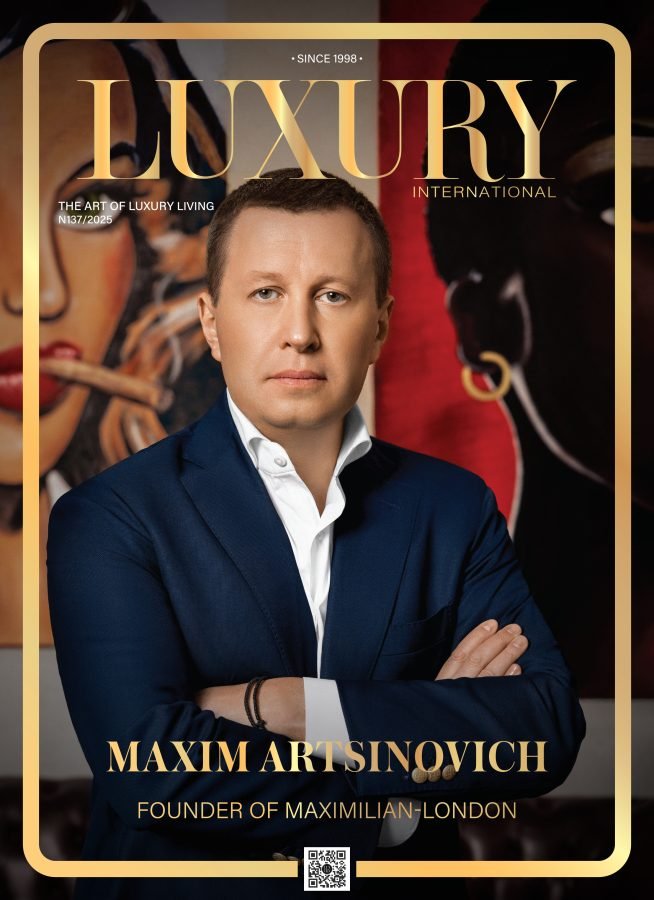
Rare gemstones have captivated collectors, investors, and luxury connoisseurs for centuries. In this exclusive interview, we dive into the fascinating world of high-value diamonds, sapphires, and rubies with the Founder of Jewellery House of MaximiliaN-London, Maxim Artsinovich. From the factors that define the true worth of the gemstone to the future of the rare gemstone market, this conversation offers deep insights into the allure, exclusivity, and investment potential of these natural treasures.
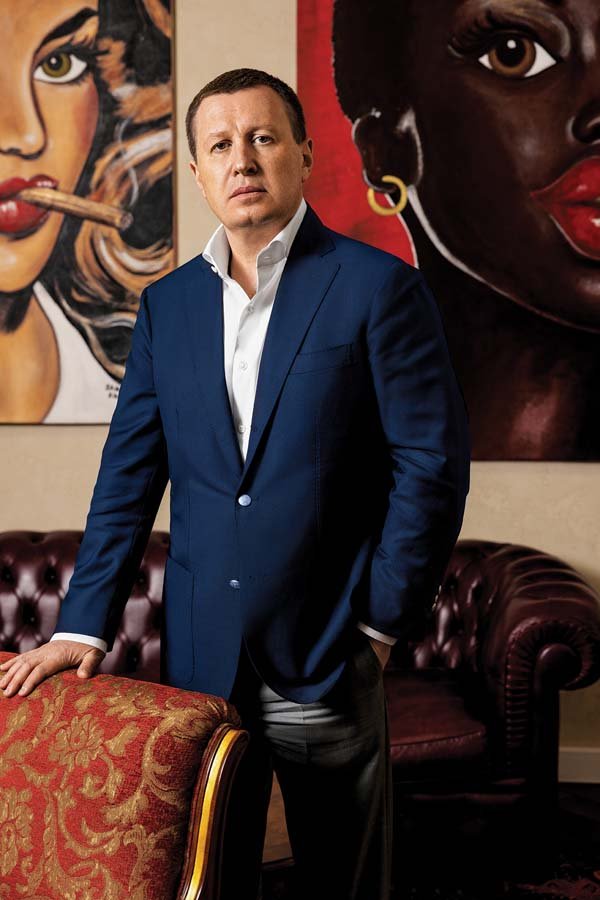
Mr. Artsinovich, what key factors make Kashmir sapphires, Burmese rubies, and untreated Colombian emeralds so valuable for investors? Are there any trends that could influence their prices in the coming years?
It is also worth adding diamonds over 10 carats in weight D colour of Flawless (FL) or Internal Flawless (IF) clarity and of Type II A, which makes them exceptionally rare stones. The gems you mentioned, along with what I added, fall into the category of investment-grade gemstones. I was the first in the world to use the term “investment gemstones” in an interview with the English Financial Magazine Spears in 2008. Before me, no one had coined such a definition. I tried to combine a love for collecting, an appreciation for art, and financial components.
For the past 15 years, we have been telling all our clients that investment gemstones are, first and foremost, a financial instrument. No luxury brand – Chopard, Van Cleef & Arpels, Cartier, Graff, Boucheron, Tiffany & Co. – will tell you this because the markups with which they sell their jewellery worldwide range from 600% to 1000%.
It is one thing when you buy gemstones on a gems exchange and jewellery show: a place, where jewelers and designers also acquire them directly from producers – that is, those who found, mined, or bought these stones in antique shops, then re-cut and certified them in the world’s leading gemological laboratories, such as GIA, Gübelin, AGL, and GR. By the way, the largest gemstone exchange is in Bangkok. And it is entirely different when you buy from a brand. In the latter case, the gemstones cannot be considered an investment due to the excessively high markup.
Investment gemstones can only be those bought at the proper wholesale price. They should not be set in jewellery, as jewellery carries the brand name, engraving, packaging… a completely different meaning. But if it is a natural, faceted stone, then it can be considered an investment. This is easily proven: over the past 20 years, the price of coloured gemstones has grown by 10-20% annually, outpacing global inflation.
In 2000, I purchased top-quality emeralds in Colombia for $3,000 per carat. Today, their wholesale price is $25,000–$30,000 per carat, while the retail price for branded jewellery can be $150,000–$180,000 per carat. The same applies to Burmese rubies. In 2000–2005, they cost $5,000–$10,000 per carat; today, at Sotheby’s or Christie’s auctions, they fetch $500,000–$600,000 per carat.
In the past 25 years, no deposit, real estate investment, or even gold investment has yielded such returns. The price growth of gemstones significantly surpasses all other alternative investments. The only comparable investment is in vintage wines.
Our core message to clients is that purchasing gemstones is a way to preserve capital. Gemstones are highly compact, created by nature itself. Gemstones weighing 10 or 15 carats can be easily transported. This makes them an excellent tool for capital diversification and portfolio diversification.
Pink, blue, purple, and red diamonds represent one of the most exclusive market segments. Which of these are currently most in demand among collectors and investors? What has been their price trend over the last decade?
There are also green and orange diamonds. All of them vary in shades: Light Pink, Fancy Light Pink, Fancy Pink, Fancy Intense Pink, Fancy Vivid Pink, each with different per-carat prices, and they increase in price much faster than white diamonds.
White and yellow diamonds are a commodity. When the stock market crashes, oil and metal prices drop, and so do the prices for white and yellow diamonds. However, looking at the trends over the past 25 years, I can confidently say that coloured diamonds have increased in value by 10% per year.
The rarest ones are red diamonds, as they never exceed 2,5–3 carats. There is a famous red diamond in London – the Moussaieff Red Diamond – a trillion-cut stone, the only one in the world weighing slightly over 5 carats. They are selling it for $10 million per carat. On average, a 1,5–2-carat red diamond is priced at $3,5 million per carat. However, the highest demand is for pink and blue diamonds.
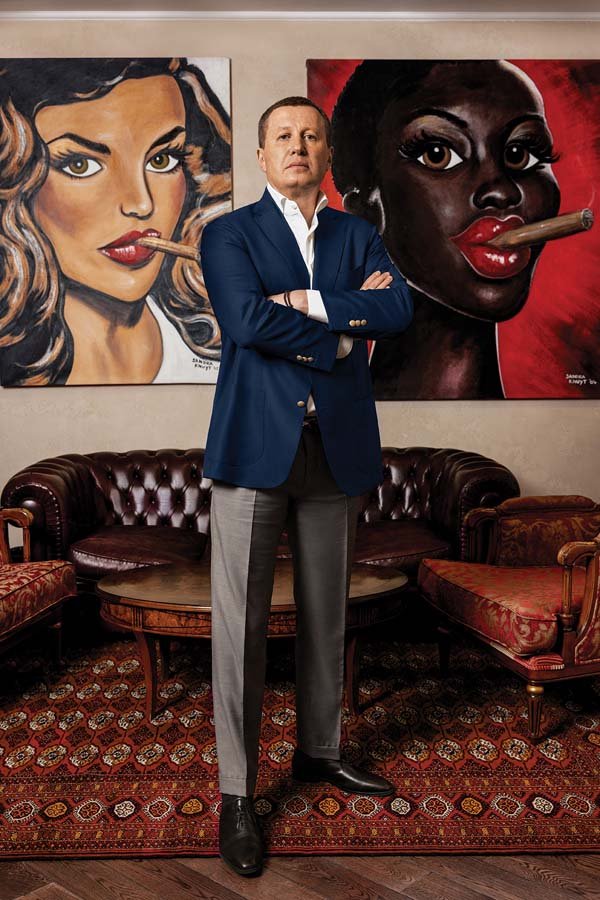 Diamonds weighing 20, 25, or 30 carats with D FL or IF Type II A characteristics have always attracted collectors. How do you assess their investment appeal compared to rare coloured gemstones? How does origin influence their value? What investment gemstones are the easiest to liquidate on the market? Are there new mechanisms or platforms that simplify the liquidity of such assets?
D FL or IF Type II A diamonds are exceptionally rare, but we provide liquidity for our clients. They want to buy gemstones that can be quickly sold anywhere in the world.
Price is influenced by cut and weight. The most expensive cut is round because it requires the most raw material to achieve the final round shape.
If, for example, a client wants to invest $1–2 million and prioritize liquidity, we recommend buying stones weighing 5 carats in pairs, such as earrings or sets of 5-carat diamonds. These are easy to sell and always in high demand worldwide.
Ultra-high-net-worth individuals prefer 20-carat oval diamonds which are presented at Sotheby’s and Christie’s or at other top auction houses of New York, Geneva, Hong Kong, London, etc. They trust auction house expertise, but this isn’t always beneficial since auction houses take a 20-25% commission. If you’re extremely wealthy, you should have a personal gemstone dealer who can select the proper gemstone for you at only a 2-3% commission, as a broker.
How has demand for natural gemstones changed in recent years, particularly given economic turbulence?
All my clients hold investment diamonds for 5–10 years before selling them, and they never lose money – on the contrary, they profit. Earning 3-5% annually on white diamonds is considered to be normal.
Banks have too many regulations, whereas jewelers gladly accept cash and cryptocurrency. The investment diamond market is growing because people are exiting crypto, locking in their profits, and shifting to diamonds, which are more liquid than crypto.
Crypto can be spent quickly, but it is highly volatile, capable of dropping 50%–80% in a single day, and no one truly understands why. Additionally, dollar inflation has been very high in recent years.
The total global market for cut diamonds is $60–70 billion, and the segment of investment-grade D FL Type II A diamonds accounts for less than 1% of this market. Wealthy clients and investors are eager to acquire these gemstones.
For comparison, the global cigarette and alcohol market is worth trillions of dollars.
With the advancement of technology, synthetic (Lab-Grown) diamonds are becoming more popular. How does their proliferation affect the natural diamond market?
There are markets for Lab-Grown diamonds, natural diamonds, mass-market jewellery, and ultra-luxury jewellery. Only 1% of the population in major cities buys ultra-luxury products.
Many natural diamonds might be less dramatic with their colour and clarity grades, which make them relatively inexpensive. Meanwhile, India and China have overproduced Lab-Grown diamonds, driving their prices close to zero.
Lab-Grown diamonds have no secondary market; they cannot be resold. Social media promotes Lab-Grown diamonds as eco-friendly, with the same crystal structure as natural diamonds, but people still prefer natural diamonds, which were formed 1–3 billion years ago, 130 km beneath the Earth’s surface, and emerged through volcanic and tectonic activity.
Natural diamonds are valuable because of their history. A 1-carat synthetic diamond costs $60–80 – it shines like a real diamond, but that’s all.
 Can you defer natural diamonds from synthetic ones at a glance?
No, it’s no longer possible to distinguish them just by looking at them. Even gemologists struggle to tell the difference when closely examining a stone under a loupe. The texture and feel of synthetic diamonds are identical to natural ones. Only highly advanced machines using spectral analysis can accurately determine their origin.
What motivates buyers of rare gemstones: aesthetics, status, or investment value?
Without a doubt – rarity. Sapphires can be found in Sri Lanka, Madagascar, Burma, Thailand, Pakistan, and many other countries, but Kashmir sapphires and Burmese rubies are the most highly valued. Kashmir sapphires command enormous prices, and Burmese rubies, particularly those classified as Pigeon’s Blood, are the rarest and most sought-after. Investment-grade rubies mainly come from Burma, followed by Mozambique. Countries like Pakistan, Madagascar, Turkmenistan, and Tajikistan are not even close to competing with Burmese gemstones.
Today, a high-quality Burmese ruby of 5-6 carats with excellent colour and clarity is sold for $500,000-$600,000 per carat on the exchange.
What certificate is considered the “Gold Standard” when buying investment-grade gemstones?
For diamonds, it’s GIA (Gemological Institute of America).
For coloured gemstones, the top three certifications are: SSEF (Swiss Gemmological Institute), Gübelin (Swiss Laboratory), GRS (GemResearch Swisslab).
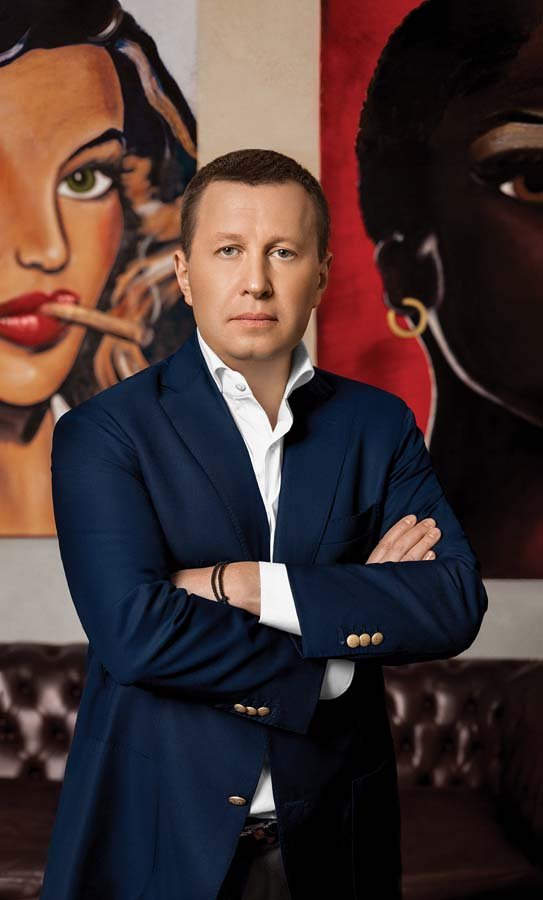 What factors will determine the value and demand for rare gemstones over the next 10–20 years?
Only rarity will dictate value. Let me illustrate this with a simple analogy: a quarter-century ago, there were three times fewer millionaires, multi-millionaires and billionaires than today. At the beginning of the 20th century, when World War I started, the global population was 2.5 billion. Today, we are 8 billion.
According to Forbes, a new millionaire appears every minute. As the world’s population and number of wealthy individuals grow, nature cannot create new gemstones at the same pace. It takes billions of years for these stones to be formed deep within the Earth, and mining locations are being depleted.
Many emerald deposits in Colombia, Brazil, Afghanistan and Burma are already exhausted. Jewellers increasingly rely on secondary markets – auctions – to acquire rare stones. As natural gemstone supplies diminish and the number of wealthy collectors rises, demand will skyrocket while availability declines.
Rich investors do not sell their gemstones often. They keep them in family vaults or secure safe deposit boxes in places, such as Zurich, London, Geneva, Liechtenstein, and Gibraltar for 20-25 years until they need liquidity. When the time comes, they can update their gemstone certificates and sell them, benefiting substantial profits.
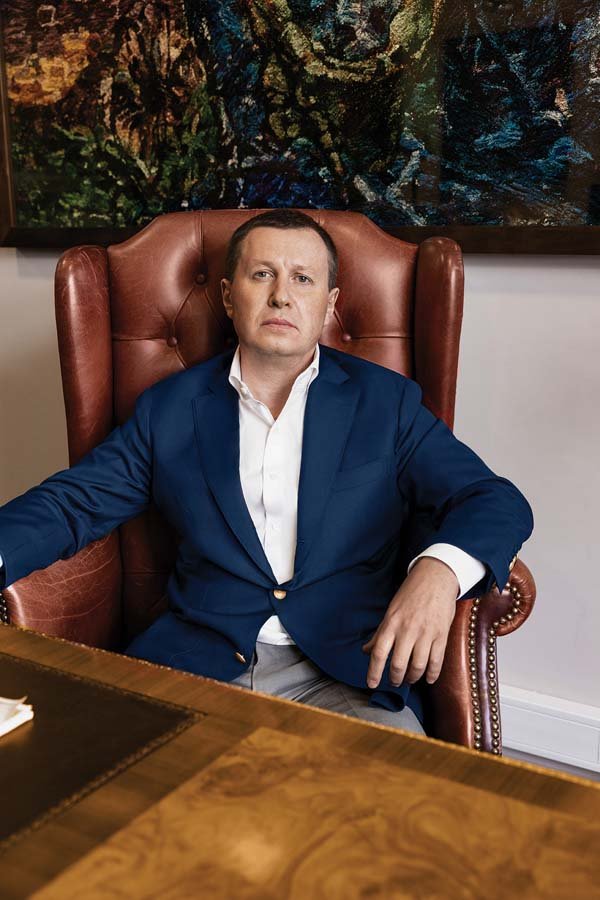 What are the key principles MaximiliaN-London follows in selecting and selling rare gemstones? What quality and exclusivity standards do you prioritize?
The place of origin is the most critical factor. It is explicitly stated in the certification and directly determines the price. For us, other key factors include: colour (Vivid Red, Pigeon’s Blood, Vivid Green), weight, clarity.
Your clients are collectors, investors, and high jewellery enthusiasts. How does MaximiliaN-London guide clients through the complex world of rare gemstones and help them make sound investment decisions?
We are a wholesale company, operating in the B2B sector, meaning we primarily supply top-tier jewellery houses. The world’s top 10 jewellery brands are among our clients. While they work with multiple suppliers, we are the first to offer them exceptionally rare stones whenever we acquire them.
When it comes to investment decisions, the goal is for the client to buy a rare gemstone at the best possible price and then set it in jewellery – either that of a luxury brand or designed by a private jeweller.
Recently, many clients have been turning to custom design. They collaborate with our designers to create unique, personalised jewellery pieces. Every detail – the setting, ring band thickness, prong shape, and enamel colour – is discussed. The result is an exclusive jewellery piece featuring an extraordinary gemstone.
Our clients want to stand out – they don’t want to wear jewellery that looks like everyone else’s.
 Which custom order stands out the most in your memory?
We created a 20-carat pink diamond ring worth $36 million. Naturally, the diamond itself was the centrepiece, but the design of the setting turned it into a jewellery masterpiece.
It was a collector’s piece, much like the work of renowned jeweller Joel Arthur Rosenthal, whose creations are exhibited in museums, such as the Louvre and the Metropolitan Museum of Art.
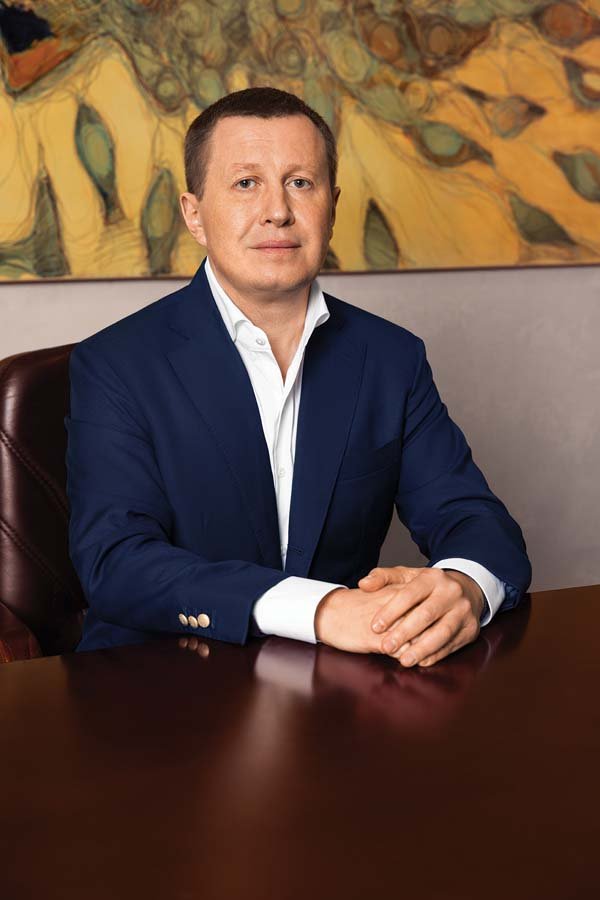 What are MaximiliaN-London future growth plans?
We are already a well-known brand in the Middle East and among former USSR clients. Over the next five years, we aim to expand into Abu Dhabi, Qatar, Bahrain, Kuwait, Saudi Arabia. We plan to open boutiques in luxury malls, five-star hotels and high-end department stores.
This expansion requires serious investment. We are currently negotiating with investors for $200 million and working with consultants, investment bankers, and auditors in London. We are confident that MaximiliaN-London will soon be worth over $1 billion after IPO at the Dubai Stock Exchange.
The ideal exit strategy for our investors (who typically hold for five years) is to sell the company at its peak value to a major luxury conglomerate like: LVMH (owns Bvlgari, Tiffany & Co., Chaumet and many other brands), Richemont (owns Cartier and many other brands), Swatch Group (purchased Harry Winston), Kering Group (owned by François-Henri Pinault).
Once the company reaches its full potential, I plan to sell it to a strategic investor.
In my later years, I dream of traveling the world and dedicating more time to sports.